Saba Digital Marketing

Guide to Making Money with Pay-Per-Click Affiliate Programs

Pay-per-click (PPC) is a broad term used by marketers and advertisers alike. For marketing gurus, PPC is a form of online marketing that allows them to potentially generate immediate sales for clients after paying a small fee for inbound clicks on an advertisement. For advertisers looking to make some money, PPC is used as an affiliate marketing tool placed on their website to generate clicks. The bottom line is that affiliate marketing PPC is a great way to make money by sending traffic to websites that choose to place ads on your website. The experienced professionals from Saba SEO, the trusted experts in Internet marketing, PPC, and SEO San Diego businesses rely on to increase targeted traffic and boost revenue, offer this advice about affiliate marketing PPC.

Getting Started

First, locate a reputable company that offers affiliate marketing programs that will pay you for every click on their ad. Because of the vast amount of click fraud that plagues the pay-per-click world, these companies often use intelligent software to determine which clicks are genuine and which aren’t. Once you sign up with one of the programs, someone at the company will review your website and application.

Affiliate PPC without a Website

In some cases, you’ll come across programs that allow you to join without having a website at all. These affiliate marketing PPC programs allow advertisers to make money by promoting links on social media accounts like Facebook and Twitter. As an advertiser, you might even get paid for both the click and the sale, if one is made subsequently made.

Requirements for Starting Out

Many PPC affiliate marketing programs require their participating advertisers to meet some minimum requirements, which could include:

  • Minimum monthly visitor requirements
  • Subject matter of blogs and whether they match the type of ads the program specializes in
  • Where you live (many require the United States or Canada) 
  • How engaged your audience is

Payout Amounts

When searching for your first affiliate marketing PPC program, choose the one that closely resembles your payment requirement. If you have a low-traffic website but a highly engaged fan base, you’ll probably see better results by choosing a niche program that offers higher per-click payments. Finally, you must understand the payout preferences of the company. Most offer to do a monthly bank transfer or send a check in the mail. If you prefer to receive payments more frequently, search for a company that can accommodate your financial needs.

If you need expert advice on PPC or any other aspect of online marketing, call on the experts from Saba SEO, a premier SEO company in San Diego. Our specialists know the top PPC strategies, so if you want to find out if pay-per-click is right for your business needs, give us a call today at 858-277-1717 and schedule a complimentary consultation.
SEO Rank Factors

Search engine optimization (SEO) is what links your content with the real people you want to view it. The “middle man” in this equation is the search engine that determines how your website and other content is displayed online. To fairly and accurately do this, search engines like Google have key ranking factors they consider. Here are the most important ones, brought to you by the experienced SEO professionals from Saba SEO, one of the top digital marketing and SEO companies San Diego businesses rely on for outstanding expertise and high-quality service.

Direct Website-Related Traffic

Direct website traffic is simply any traffic coming from people typing your exact website address or accessing your site via a bookmark. This particular factor is important because it affects the top search results displayed. It’s also considered a sign of trust and brand awareness. Boost this ranking factor by:

  • Creating brand awareness outside your website (e.g., active social media use, paid ads, posting useful videos, etc.)
  • Making the user experience memorable for visitors coming to your site
  • Using a vanity URL that’s easier to remember

Time Spent on Your Site

Google is all about searcher relevance these days, which is why time spent on your site is a major ranking factor these days. The average time spent on a website is about 3 minutes. If you’re seeing visitors bail sooner than this, it’s time to find out why. Common culprits include:

  • In-your-face pop-ups and other annoyances
  • Content that doesn’t match webpage titles
  • Difficult website navigation

Bounce Rate

Referring to the percentage of visitors who leave your site after visiting a single page, bounce rate is a ranking factor you need to keep low. If it’s too high, it means searchers don’t want to explore your site once they’ve actually found it. Keep your bounce rate in check by:

  • Linking to relevant pages within your content (deeper linking)
  • Using side bars to spotlight useful/appealing content
  • Finding the right mix of text, images, and video content

Pages Per Session

This is another ranking factor that indicates how engaged visitors are with your site. It shows how many pages visitors typically check out when they come to your website. The average is two, so shoot for two or more.

These are just some of the many SEO ranking factors Google and other leading search engines consider. It’s also important to pay attention to the quantity and quality of links pointing back to your site (backlinks), the quality and length of your content (longer is better), and how mobile friendly your website is.

Optimizing your website for SEO ranking factors is one of the smartest things your business can do in today’s online-centered marketplace. If you need help staying on top of ranking factors to remain competitive, call on the SEO and digital marketing experts from Saba SEO, a premier provider of Internet marketing service San Diego companies have relied on for more than ten years. Call one of our SEO specialists today at 858-277-1717.

Pros & Cons of SEO

Search engine optimization (SEO) has both advantages and disadvantages. Although it’s considered one of the most important tools to rank higher with Google, there are downsides to SEO. Here are the pros and cons of SEO, brought to you by the SEO experts at Saba SEO, an industry-leading San Diego SEO company businesses rely on for high-quality service and unparalleled marketing expertise.

Advantages

Free

SEO is totally free of cost, and it depends on how much time you spend researching keywords and utilizing them in your high-quality content.

Localized Traffic

Using local SEO tools such as Google My Business can help you improve your localized traffic.

Mobile Friendly

Good SEO means your site is responsive, your site speed is good, and there’s no latency for mobile users.

Expert Status

Following best SEO practices means your site is an authority. You only have one article per keyword, and you only have backlinks from high-quality sites.

Customer Friendly

Potential customers find your site because of your SEO. They come to your site and see that you’re professional. There are no grammatical errors in your content. You’re using the latest technology on a secure site, and they only need to locate the buy button.

Disadvantages

Targeted by Competitors

Effective SEO means you rank high. Sites that rank high are targeted by competitors who want a slice of the SEO pie, which means you’re always on your toes.

Changes

SEO can change. Just say the word “panda” and watch business owners frown. One small change to SEO, and you can be at the top of the search results one day and the next day find your site greatly demoted.

Penalties

You need to always be on top of your game, which may require some financial investment. One example is websites that haven’t been upgraded to responsive design will be penalized.

Slow Results

SEO isn’t a fast-moving process. You can update your site and use best practices and not see results for months.

No Promises

You could update all your content and website features and still not find that your site has improved. SEO doesn’t promise results.

When you’re looking for ways to boost your site’s rank, make sure to work with professionals who have expertise in SEO. In San Diego, SEO companies know they can rely on the experience and know-how of the SEO pros at Saba SEO to help them increase rank, build their customer base, and grow revenue. For help with your SEO strategy, call one of our knowledgeable SEO specialists today at 858-277-1717.

5 Key Principles of Effective Web Design

Web design is critical for conversions and your brand’s overall image. After all, searchers aren’t going to take the desired actions and stay connected with your business online if you don’t present a site designed with their needs and expectations in mind. Effective website design is all about the decisions you make as you put together your various webpages. To point you in the right direction, the experts at Saba SEO, a premier web design company in San Diego, offer these five principles of smart web design to consider.

1. Keep It Simple and Clean

There’s such a thing is overdesigning a website. If you overload your website with too many features and elements, you could overwhelm visitors. Instead, opt for a design that’s simple, clear, and focused. An “everything but the kitchen sink” approach to web design could also:

• Slow page load times
• Confuse visitors
• Obscure the purpose of your site

Also avoid overdoing it with colors. The same advice applies to the number of images and videos you put on each page.

2. Maintain Consistency

From your preferred color scheme to the fonts you use for headlines and text, maintain consistency in your approach to web design. Cascading style sheets (CSS) can help you achieve this goal as you plan the formats and layouts of your webpages. In fact, once your style is defined with a CSS, it can be applied to any page that references that file.

3. Make It Readable

Even though you want to make your site crawlable, it’s still meant to be viewed by real people. For this reason, you should optimize readability with your design. Fortunately, your site can be visually appealing and readable with:

• Easy-to-read fonts such as Arial and Helvetica
• Short, descriptive headlines
• Bullet lists where it’s appropriate to use them
• Spacing between paragraphs
• Short paragraphs so you’re not creating “text mountains”

4. Consider Mobile Users

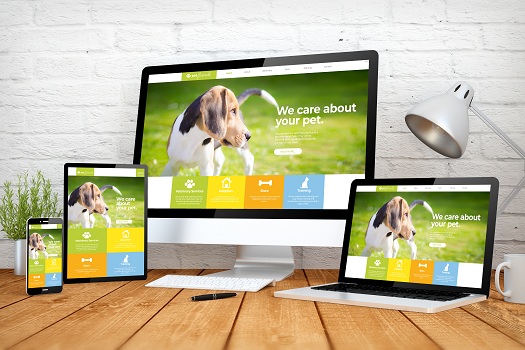
Since around 2015, mobile has been more popular than desktop. Google even has a preference for evaluating how sites look from a mobile viewpoint for ranking purposes (“mobile first”). Your approach to web design should keep smaller screens in mind. If you also want to keep desktop viewers happy, consider a responsive approach to web design. With the use of flexible grids, flexible images, and similar techniques, you can produce a site that conforms to whatever screen it’s being viewed on.

5. Make Navigation Easy

There’s research showing visitors are more likely to stick around when they get to a website if the navigation is easy. This isn’t shocking news, but it’s a reminder to keep navigation in mind as you design your site. A good rule of thumb is the “three-click rule”—make it possible for visitors to get where they want to go on your site in no more than three clicks.

These key principles of smart website design can increase the odds that your website effectively represents your business. For advice on any aspect of Internet marketing, from web design to SEO, businesses count on Saba SEO, an industry leader among San Diego marketing companies, for the highest levels of expertise and professionalism. Call us today at 858-277-1717 to speak with one of our friendly representatives.

Best Practices for SEO

Search engine optimization (SEO) isn’t something you do once and check it off your list. Best practices for SEO form an organized framework for giving your website a fighting chance to rank at the top of search results, and they’re practices you consistently use every day. The professionals at Saba SEO, a premier provider of SEO services San Diego businesses rely on, offer these SEO best practices you need to implement in 2019.

Natural Voice Search

Voice searches on home and mobile devices and in cars means searches are slightly altered by natural voice search keywords. Research natural voice search keywords and use them in your content.

Keywords

Only have one primary keyword per page. If you have multiple pages with the same keyword, Google just picks one, which may not be your best content. You need to condense all content with that single keyword, or you could make one larger post using that keyword. Then edit and alter the keywords of the other pieces by using a secondary keyword. Make sure to go back and link that content to the page with the main keyword.

Expertise

Google is creating a database of the most authoritative sites. Your site can demonstrate expertise by including high-quality content, updates to your website, and quotes and links from other authorities in your business.

Trustworthiness

Sites that are trustworthy are going to rank with Google. They’re also going to be successful in gaining the trust of potential customers. Your site must be updated to HTTPs, which is faster and demonstrates you keep your site up to date. Your site should offer testimonials from happy customers.

Links

Links from other sites to yours are called backlinks. Those links should only be from high-quality sites. Check your backlinks and contact the site administrators for any backlinks you’d like removed. Your own site should have internal links. These links should run in and out of your content to solidify your authority.

If you need help creating or refining your SEO strategy, reach out to the experts at Saba SEO, one of the premier SEO and digital marketing companies in San Diego. Our experienced specialists can help you with marketing campaigns, social media management, web development, search engine optimization, and much more. To find out more about our high-quality SEO services, give us a call today at 858-277-1717.

Elements of Responsive Web Design

The designing and developing of a website should fit the user’s circumstance as well as behavior. The web design should be based on screen size and take into consideration the way the user accesses the Web. Web designs range from desktops to iPhones. The variation in screen sizes means web designs must be created with a one-size-fits-all approach. This concept of making web designs that will accommodate users of all types is called responsive web design. The San Diego web design specialists at Saba SEO discuss the three vital elements required for a web design to be called responsive. The components of a responsive web design include:

  • Enabling different diverse views to meet requirements for media queries 
  • Having flexible images within it
  • Having a flexible grid

These three elements must be in place to create a responsive web design. The media queries in the context of the responsive web design are viewed as the method of designing the website to fit the various sizes and shapes of screens. A strong HTML and CSS foundation is required that will encase the flexible grids and flexible images. The media queries are of no use without these.

One of the most important elements of a responsive web design is images that are proportioned for the flexible grid. If not done properly, this could be a nuisance to web designers. Sometimes, they’ll need to load large images, then resize them using the HTML height and width aspects. Some designers have various sizes of the images left on the server. The images can be sized for any purpose by using the DOM manipulation. Website designs are changing constantly, and owners are taking out stock photos and images they don’t need to get their messages across to viewers. A sound piece of advice is to take out images that aren’t needed.

Web owners who use flexible grids won’t be prevented from using better grid systems. They’ll have the option to choose their parameters for columns, spacing, and containers. In fact, the systems of today’s modern times use class CSS, and they’re restricted to deciding size, space, and alignment. It can be very time-consuming to try this method to conform to the responsive web design.

A professional web design firm can ensure your site employs responsive web design. For over ten years, Saba SEO, a premier San Diego SEO company, has designed websites for businesses all over the world. In addition to web design, we also offer search engine optimization, content marketing, and social media management services. Whether you need basic SEO services or improvements to your website, give us a call at 858-277-1717.

Pay-Per-Click: Boosting Your Digital Marketing Strategy

The goals and fundamentals of digital marketing have always remained constant. The primary goal is to drive traffic to a website or landing page and convert that traffic into revenue for your business. To achieve this, the best marketers have always relied on high-quality written and visual content, consistent inbound link building, email marketing, and more. Pay-per-click campaigns have also been a driving force behind whether digital marketing plans succeed or fail. Businesses looking to work with a premier PPC agency should make sure to choose experts in Internet marketing San Diego businesses trust to provide reliable, high-quality service.

The Basics of Pay-Per-Click

Pay-per-click marketing has been around for more than a decade. Originally, major search engines like Google and Yahoo were the only sites that offered these types of ads. Now, paid ads can be placed on nearly every website imaginable through a network of digital ad companies.

Here’s how pay-per-click works:

  • You create and post an ad – The first step is to create an attractive ad that conforms to the advertising company’s standards, which usually involves a short paragraph and an image. Then the system will automatically post the ad to various websites, search engine results pages, and social media networks that match the demographic settings you choose.
  • Your ad is clicked – Once the ad appears online, browsers who click on it will be taken directly to your website or a designated page.
  • You pay for the click – The click you received from a browser will generate a payment to the advertising company. The amount of the payment will vary between a few cents and several dollars.
  • The browser completes an action – Once on your website, the browser will be converted into a paying customer.

Pay-Per-Click in 2019

Pay-per-click can be a lucrative marketing tactic for business and website owners. To be successful, you’ll need to determine how much each click is going to cost you and compare it to a revenue amount that will likely be generated by the marketing campaign as a whole.

Pay-per-click campaigns have become a much more viable option in 2019 because social media and search engine companies have made it easier to identify highly targeted demographic groups in an effort to streamline PPC costs and increase revenue for ad buyers. If you’ve recently launched a product or website online, pay-per-click can be the fastest way to generate large amounts of revenue.

If you need a top-notch paid marketing strategy for your business, the experts at Saba SEO can help. Our team of SEO experts, web developers, and content specialists have almost fifteen years of experience in helping businesses create and execute winning online marketing campaigns, boost search engine rankings, and attract high-quality leads. Call 858-277-1717 today to get in touch with an experienced SEO Manager at the SEO company San Diego businesses trust for outstanding expertise and high-quality service.

10 Advantages of Digital Marketing for Small Businesses

Digital advertising can generate $3.00 for every $1.00 spent on advertising. However, more than half of small businesses don’t take advantage of digital marketing. Digital ads are viewed on computers, smartphones, and other electronic devices. The San Diego SEO specialists at Saba SEO share 10 reasons you should be promoting your small business digitally.

1. Digital Advertising Is Cheaper

A small business’s marketing budget is usually proportionate to its size. Digital advertising is 40 percent cheaper than traditional forms of advertising. Gartner, a research and advisory company, reports 41 percent of digital advertisers put the savings from their digital ad campaigns back into their businesses.

2. Approximately 80 Percent of Searches for Goods and Services Begin Online

Digital marketing is rapidly supplanting traditional advertising media such as print, radio, and TV. The reason for this trend is convenience. Typing your search criteria into a search engine is easier than thumbing through a newspaper hoping to find what you want. Searching ads on radio and TV isn’t an option.

3. Digital Marketing Prepares You for the Future

Someday every electronic device will be connected and controlled using the “Internet of things.” How does this affect digital advertising? Projections are that in the next year alone, digital ads will be viewed on 26 billion devices connected to the Internet.

4. Digital Ads Level the Playing Field

There was a time when a small business wouldn’t be able to hold its own against a corporate giant. By enabling small businesses to reach more potential customers more cheaply, digital marketing increases a small firm’s chance of going toe-to-toe with big businesses.

5. Digital Marketing Provides Increased Return on Investment (ROI)

Digital marketing is also known as inbound marketing, which is tailored to specific individuals, creating a rapport between a business and the consumer. Inbound ads generate in excess of 50 percent more sales leads compared to outbound advertising that utilizes print and traditional media. Inbound advertising is 13 percent cheaper than outbound advertising.

6. You Can Offer Improved Customer Service

Good customer service is essential to a business’s success. Digital marketing enables a business to answer its customers’ questions and resolve issues customers have in real time.

7. You’ll Be Able to Tap into the Mobile Consumer Market

Approximately 34 percent of Internet searches originate from a mobile device. Digital advertising gives you access to a wider customer base. You can also keep abreast of buying trends among mobile device users.

8. Digital Marketing Increases Sales

A touchpoint is any interaction between buyer and seller. A business usually has to satisfy six touchpoints to generate a sale. Digital marketing can satisfy those touchpoints, potentially leading to a fourfold increase in sales.

9. There’s a Lower Cost Per Lead (CPL)

CPL refers to what a business spends to generate a single lead. Among all forms of marketing, digital marketing offers the lowest CPL.

10. Digital Marketing Helps Businesses Stay Competitive

Digital marketing is the future of business advertising. Small businesses that fail to utilize digital marketing (including social media) will fall behind their competitors.

Whether you need an SEO strategy or a focused digital marketing campaign, the experts at Saba SEO can help. We are among the best marketing companies in San Diego. For almost fifteen years, we have designed successful digital marketing campaigns for businesses all over the world. Our specialists can assess your business objectives and target market and help you create the perfect mix of tactics that can boost your online visibility and improve your conversion rates. To learn about our high-quality services, give us a call at 858-277-1717 today.

How to Boost Your Domain Authority

Anyone who has a business and an online presence knows the ultimate goal is to get to the top of the first page in Google’s search results. This goal is often not achieved because the right steps aren’t taken to increase a website’s authority among competitors. Whether you’re new to the online marketing world or simply need a refresher on how to get it done right, use this how-to guide for improving your domain authority, brought to you Saba SEO, a premier provider of Internet marketing services San Diego businesses trust for unparalleled expertise and exceptional value.

A Brief Overview

In a nutshell, domain authority predicts how well a specific website will rank when compared to other websites. This measure was developed by Moz, a leading source for online marketing. Websites are ranked from 1 to 100. The higher a website is on this scale, the more traffic it’s likely to receive.

Link Diversity

One of the biggest factors used to determine domain authority is the type and quality of inbound links to your website. Perform a quick audit of these inbound links to ensure none of them come from spam sites. If you notice all of them originate from similar types of sites, try to gain diversity with sites that are totally different but might still have a need for your content.

Social Media Mentions

Social media plays an important part in promoting content, which is why it’s used in this equation. Make sure your website has profiles on every major social media platform and you’re engaging directly with those who like or follow your company online.

High-Quality Content

Ever since the beginning of the Internet, content has always been the most important factor in succeeding online. Today is no different. High-quality, well-written content will attract more inbound links because you’ll be viewed as an authority on your subject. Domain authority takes time. In many cases, websites won’t see a significant increase in their ranking for two to three years. However, using the above tips can help you make small but meaningful improvements over time.


If you need a comprehensive digital marketing plan, turn to Saba SEO, a San Diego SEO agency with expertise you can trust. For almost fifteen years, we have offered customized, high-quality digital marketing services to a wide variety of industries. From search engine optimization to pay-per-click management, we offer a range of solutions to help our clients boost their online ranking and conversion ratio. Our experts stay up to date with the latest trends in digital marketing and offer quality-assured services. To learn about our Internet marketing plans and packages, give us a call at 858-277-1717 today.

Marketing on Social Media: The Numbers

It’s hard to believe social media didn’t exist at the start of the new millennium. Today, it’s something used by pretty much every age group on a regular basis, which is why it can be a powerful marketing tool. Using Facebook, Twitter, YouTube, and other platforms for the purpose of brand or product promotion is known as social media marketing (SMM), and it’s a popular and effective way to connect with people digitally. If you need some more proof, read on for a rundown of the latest social media marketing stats, brought to you by the social media experts at Saba SEO, a premier marketing, web development, and SEO company in San Diego.

Users Are Active Every Day

There are more than 3 billion social media users worldwide who are active and engaged daily, which amounts to roughly 40 percent of the population. Part of the reason for this trend is because of the many ways people have to stay connected to their favorite social platforms via various mobile apps and devices.

Facebook Is the Social Champ

If you’re just looking to tap into a massive volume of social media users to spread the word about your brand, Facebook is the platform to consider. Nearly 70 percent of U.S. adults are self-proclaimed regular Facebook users. Some of the other popular social platforms today may surprise you a bit. They include:

• WhatsApp
• QQ—an instant messaging platform
• WeChat—an all-in-one communication app
• QZone—a social sharing platform
• Tumblr
• Instagram
• Twitter

Millennials Use Social Media Most

Not surprisingly, 90 percent of millennials are active social media users, followed by Generation X (77.5 percent) and baby boomers (48.2 percent). Diving deeper into stats about who uses which platform most—based on key demographics such as age range—can help you determine which platforms are right for your social media marketing needs and goals.

A Lot of Consumers Use Social Media

Nearly 75 percent of marketers consider SMM to be “somewhat” or “very” effective. Even more importantly, more than half of all searchers use social media to research products. Plus, 71 percent of social media users who have good social experiences with a brand are more likely to spread the word about that business. These facts may be impressive, but social media marketing is only going to be effective if it’s based on what matters most for your business, budget, and target audience. That being said, with the right attention to detail, you could be treated to a very good return on your investment if you do social media marketing right.

For the highest-quality expertise on social media and Internet marketing, San Diego businesses turn to the professionals at Saba SEO. For almost fifteen years, we’ve provided outstanding service in several specialized areas, including social media management, SEO, SEM, web development, and web design. We’d love to help with your social media marketing strategy, so call one of our knowledgeable consultants today at

858-277-1717.

Request A Free Consultation